The Triune Era
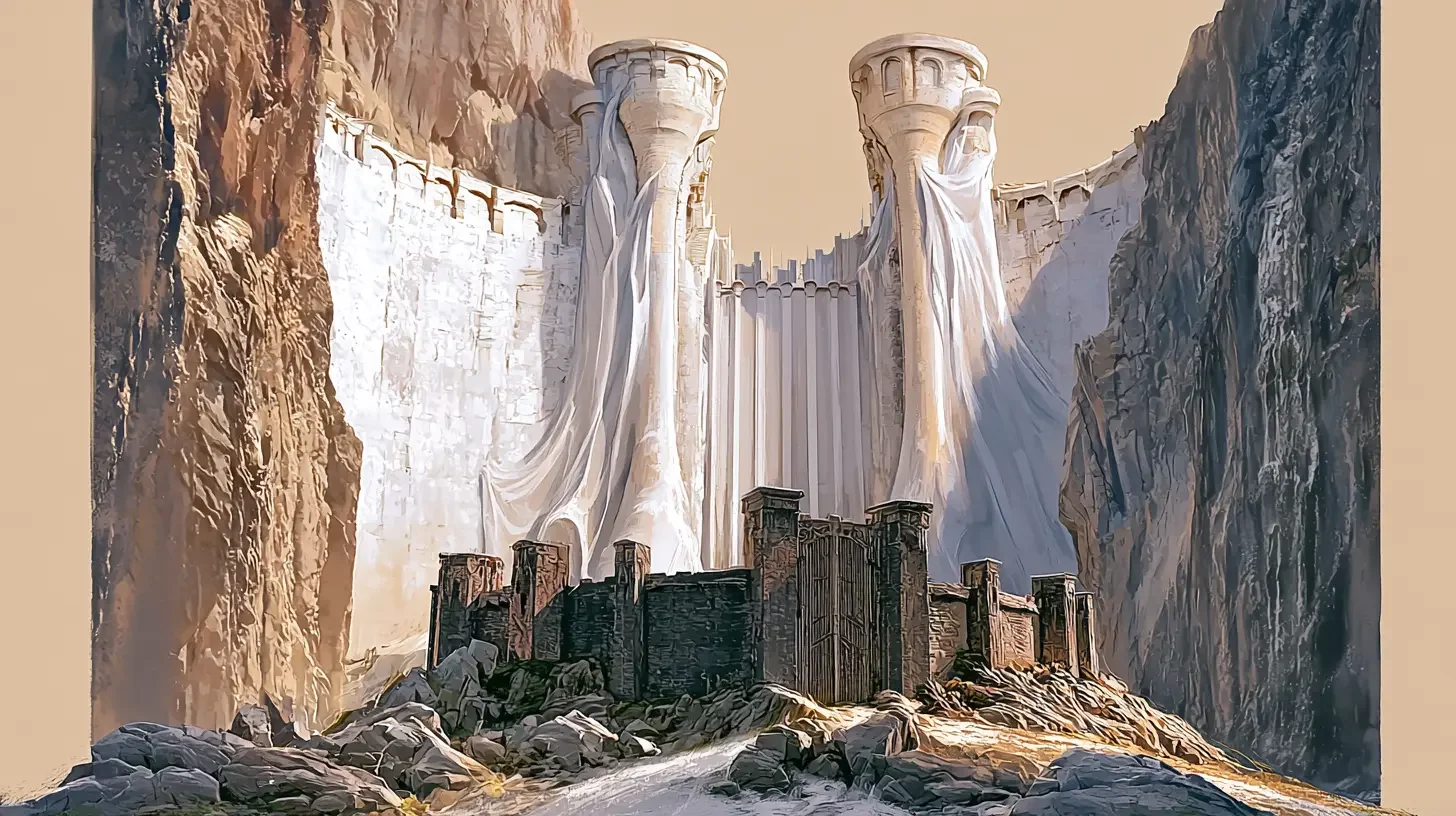
“In those days, the Powers did not argue. They sang.”
—Archivist Helan Var, Meditations on the Triune Collapse
When all Powers spoke in one voice.
Three thousand years ago, the world stood unbroken.
In what is now called the Triune Era, the Powers of Mind, Magic, and Machine were not in competition—but in concert. Thought shaped spell, spell fueled device, device amplified thought. It was an age of synthesis and staggering achievement, when the impossible became commonplace, and the boundaries between disciplines blurred.
But harmony proved fragile.
The Wars of Power brought the era to a violent end, sparked by a failed bid for dominion by the Engineers—those who sought to elevate Machine above the others.
What followed was devastation, division, and the unraveling of what had once been whole.
The world has not known such unity since.
Yet remnants of that golden age persist. Rare artifacts from the Triune Era still surface: blades that hum with psionic resonance, lanterns that burn without flame or fuel, vaults sealed by symbols no mind or mage can yet unlock. All bear the same unmistakable hallmark—a lattice of etched lines, like delicate circuitry, spiraling in patterns none now living can fully decode.
Each is a whisper from a time when the Powers were one.
Author’s Note: The Weight of History
It was always important to me that Necsis not feel like it existed solely for the characters’ benefit. The world had to feel lived in—a place with scars and triumphs, legends and debris. It needed history that made sense, even when the characters didn’t know it.
There are also plot reasons for why I needed to understand that history in detail… but you’ll have to wait for those.
Very early on, I decided that when the story begins, the Three Powers would be at their lowest ebb. From that, it followed that there must have once been a peak—a time when they stood at their fullest strength. A golden age. A renaissance.
So I asked: What would it look like if all Three Powers—Magic, Mind, and Machine—worked together?
That thought became the foundation for the Triune Era.
Imagine Machines empowered by Magic and given intelligence by Mind. Imagine spells amplified by circuits. Telepathy enhanced by technology. The possibilities were staggering—and that was the point. If each of the Three Powers was formidable on its own, how much more incredible could they be in concert?
But no golden age lasts forever.
What rose together must fall apart.
The Triune Era came to an end in the Wars of Power—a conflict sparked by the Engineers, who sought to elevate Machine above the others. That war shattered the unity of the Powers. Its consequences still echo through the story you’re about to read.
(More on that in the Machine section.)
As for the name—originally, I called it the Age of Might. This was before I’d read Robert Jordan and his Age of Legends, though the overlap became obvious soon enough. Over time, I came to feel Age of Might was not only too similar, but also too vague.
Eventually, I realized the name should reflect what made the era special: the harmony of the Three Powers.
And so, the Triune Era was born.