If gears turn on their own, beware,
Lest they lead to foul despair.
If power sparks without your hand,
It falls beneath the Ban’s command.
Tools that help, but not replace,
Keep balance strong in every space.
With heart and thought, the world will thrive,
But hubris leaves no soul alive.
—Children’s Rhyme, Modern Era
In the Triune Era, the Engineers were the stewards of Machine, charged with translating the strange bounty of the Shifts into lasting works. They were more than builders—they were interpreters of alien logic, able to coax a device from an unfamiliar world into harmony with our own materials and needs. Theirs was a craft of patience, curiosity, and discipline.
Yet, over centuries, that discipline eroded. To many Engineers, the other Powers—Magic and Mind—seemed limited by their dependence on rare gifts. Not everyone was born to be a wizard or Thought Master. Technology, they argued, belonged to all, and so must inevitably surpass its rivals. From this belief grew the doctrine of Machine Ascendant: the conviction that only Machine could lead Necsis to true mastery over the Shifts and all worlds beyond.
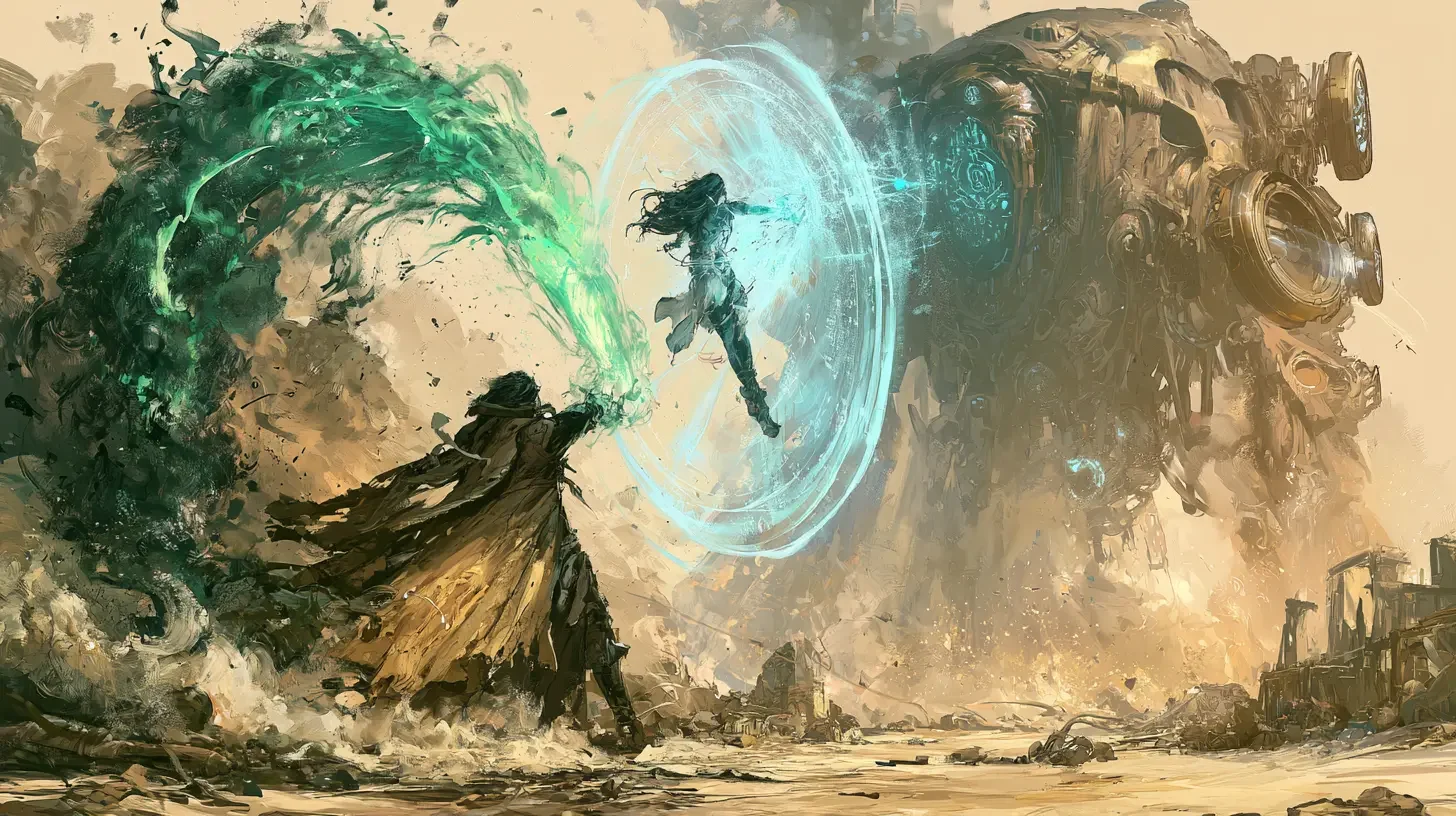
The doctrine’s fruits were bitter. In pursuit of dominance, the Engineers overreached, constructing engines of war that could be mass produced and wielded by any hand, without training or restraint. In the Wars of Power, their creations severed ley lines, shattered the mental plane, and left entire kingdoms in ruin. Their victory was within sight—until the backlash came.
Defeated by the combined might of mages and Thought Masters, the Engineers were cast down. In the reckoning that followed, the Ban was enacted: a sweeping prohibition on all advanced technology. What had once been the pride of the Triune Era became contraband, and the very word “Engineer” a shadowed insult.
More than two thousand years have passed, yet the Ban still shapes our world. Its reach extends beyond law into culture, where suspicion of “self-working” devices is ingrained from childhood rhymes to royal decrees. It has preserved a measure of stability, but at the cost of innovation—ensuring that when new technologies arrive through the Shifts, most are dismantled, hidden, or quietly destroyed.
And still, the Ban is not absolute. The Mechanized Concord works in secret to preserve what can be saved, just as certain guilds look the other way when a useful device survives in plain sight. Whether this quiet defiance is wisdom or folly remains to be seen. The Wars of Power left us one unassailable truth: Machine can be used by any hand. The question the Ban still asks is whether those hands can be trusted.
Author’s Note: Ban-Aid
Necsis’s history includes a golden age when the Three Powers—Magic, Mind, and Machine—worked in perfect harmony, achieving wonders beyond imagining.
However…
When developing The Infinite Saga, I knew I needed a firm grip on those Powers. Left unchecked, any one of them could derail the “train of plot”—too much power in anyone’s hands, even my heroes’, would drain the drama. They needed limiters.
For technology, inspiration came from Earth’s own history. Rarely has one culture triumphed over another on merit alone. The Inca, for a time, conquered through cultural superiority—so remarkable in their way of life and applied knowledge that others willingly joined their empire. Then Europe arrived with gunpowder weapons, and the Inca didn’t stand a chance.
Thus came the Wars of Power, leaving the heroes to enter a Necsis where the Three Powers are at their all-time low. Will the Outlanders change history—and avoid the missteps of the past? Only time will tell—and as you’ll see, Necsis remembers its lessons… even if it doesn’t always follow them.